

Table of Contents
Small business owners face a critical pain point: manual lead management consumes 20-30 hours per week across operations teams. For a 10-person company, that represents over $500,000 annually in lost productivity. Traditional methods—manual email lists, spreadsheet follow-ups, and delayed responses—result in missed opportunities and lower conversion rates.
The challenge intensifies during growth phases. As companies scale from 5 to 50 employees, hiring dedicated SDRs (sales development representatives) becomes cost-prohibitive at $50,000-$80,000 per employee annually. Yet without proper lead management, revenue stalls. This is where AI-powered lead generation automation transforms operations.
Recent data reveals that AI lead generation tools save sales teams 15+ hours per week by automating research, prioritization, and initial outreach. Companies implementing AI lead scoring report 25-35% improvements in close rates and 77% higher lead generation ROI. For small business owners operating on thin margins, that ROI difference is the difference between growth and stagnation.
The 7 Best AI Lead Generation Tools Compared
To serve small business needs (5-50 employees, $50K-$1M revenue), we evaluated tools on three criteria: ease of use (no-code/low-code preference) and affordable pricing ($15-$150/month starting point).
| Tool Name | Pricing | Best For | Key Features |
|---|---|---|---|
| Zapier | $29.99/month (starter) | Workflow automation and multi-app integration for lead management | – Connect 7,000+ apps – Automated data workflows – No-code automation – Advanced filters – Lead nurturing |
| HubSpot Sales Hub | $90/month per user | All-in-one CRM with AI lead sourcing and marketing automation | – AI lead scoring – Email sequences – Meeting scheduling – Pipeline management – Website visitor tracking |
| Apollo.io | $49-119/month per user | B2B outbound prospecting and email automation | – 265M+ verified contacts – Email sequencing – Phone dialer – AI-powered lead scoring – CRM integrations |
| Make.com | $9/month (10,000 credits) | Automation workflows and multi-channel lead engagement | – Scenario builder – Webhooks – Real-time automation – Integrations support – AI-powered workflows |
| ActiveCampaign | $15-145/month (Starter-Enterprise plan) | Small business teams running email sequences, lead scoring, and behavior-triggered campaigns | – AI-powered automation builder – Advanced lead scoring - Email campaigns – CRM integration – Site tracking - Behavioral triggers – SMS & landing pages |
| Intercom | $29-132/month per seat (Essential-Advanced plan) | SaaS and service companies converting website visitors with AI chatbots and instant support | – Resolves 82% of support volume autonomously 24/7 - Live chat - In-app messaging - Unified email inbox across channels - SMS & WhatsApp integration - AI Copilot - Proactive messaging |
| Landbot | €40/month (Starter plan; €40+ international) | Businesses capturing leads via WhatsApp, website chat, or conversational forms without coding | – Visual drag-and-drop builder – WhatsApp integration – Conversational forms - Lead enrichment - Multi-channel deployment – A/B testing - Auto-lead routing |
1. Zapier – Best for Workflow Automation & Integration
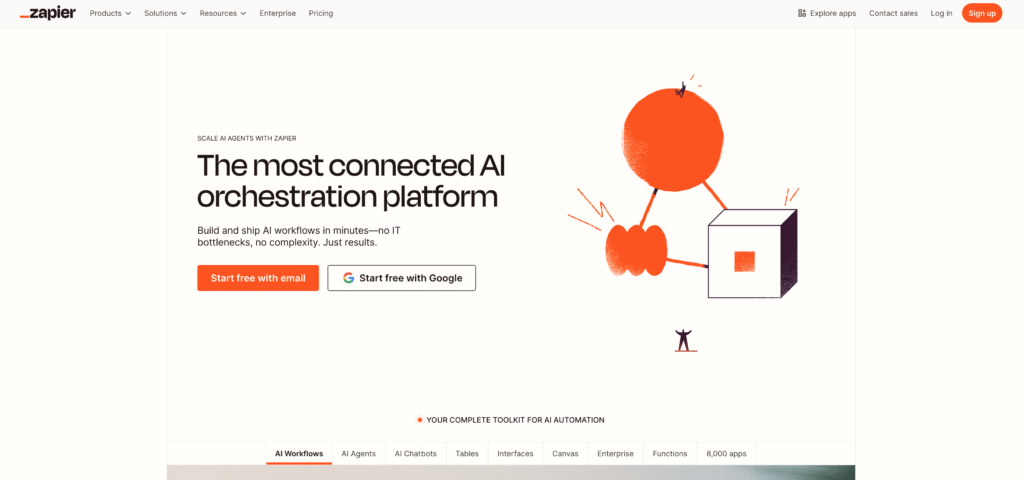
Pricing: $29.99/month (Starter plan) | Free tier available (100 monthly tasks)
Best For: Automating multi-step lead workflows without code; integrating CRM, email, and form tools.
Key Features:
- Connects 7,000+ apps (Google Sheets, Slack, Salesforce, etc.)
- Automated data workflows trigger based on lead behavior
- Visual automation builder requiring no coding
- Advanced filters for conditional routing
- 24/7 automation runs while you sleep
Pros:
- Unbeatable app ecosystem—almost any tool integrates with Zapier
- Non-technical teams adopt quickly; visual interface reduces onboarding time
- Affordable starting point ($29.99/mo) with pay-as-you-grow scaling
- Trusted by 10M+ users globally
Cons:
- Task-based pricing scales quickly; 2,000 monthly tasks = $588/year (vs. Pabbly one-time $249)
- Can feel overwhelming with 7,000+ integrations (choice paralysis for beginners)
- Requires some workflow design thinking
ROI Impact for Small Business:
A 10-person marketing team using Zapier to sync website leads into CRM, trigger email sequences, and notify Slack automatically can eliminate 8-12 hours/week of manual data entry. At $50/hour fully loaded cost, that’s $20,800/year in recovered productivity. Zapier investment: ~$360/year = 58x ROI in year one.
2. HubSpot Sales Hub – Best for All-in-One CRM + AI Lead Scoring
Pricing: $90/month per user (Professional tier)
Best For: Teams needing integrated sales CRM, email automation, and AI-driven lead qualification.
Key Features:
- AI-powered lead scoring analyzing 50+ behavioral signals
- Automated email sequences with conditional branching
- Meeting scheduling linked to CRM
- Website visitor tracking with real-time alerts
- Built-in phone and SMS capabilities
Pros:
- Industry-leading brand authority (10M+ users) instills confidence
- Integrated platform eliminates tool-switching; everything in one dashboard
- Free CRM tier for startups (generous feature set)
- Startup program: 90% off year 1, 50% off year 2, 25% off year 3
- AI lead scoring is transparent; shows which signals triggered scoring
Cons:
- Per-seat pricing becomes expensive quickly; 3 users = $150-$450/month
- Learning curve steeper than point solutions (many features to explore)
- Setup often requires consultant help; onboarding costs apply
ROI Impact for Small Business:
A 5-person sales team using HubSpot AI lead scoring to prioritize deals sees 30% increase in qualified meetings (vs. manual prioritization). With average deal size of $5,000 and 20% conversion uplift, that’s $30,000-$50,000 additional annual revenue from better lead focus. HubSpot cost: $300/month = $40/month per $10K revenue increase.
3. Apollo.io – Best for B2B Prospecting & Outbound Automation
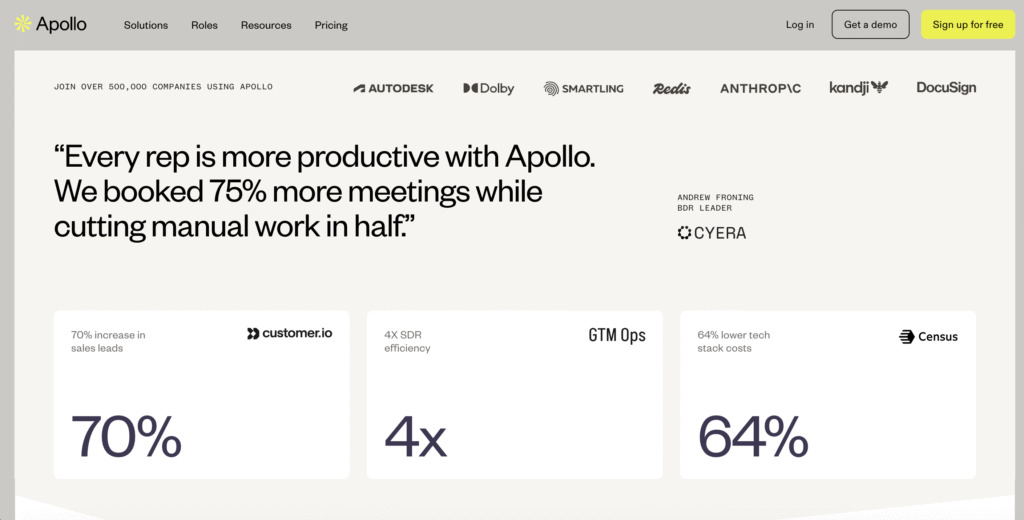
Pricing: $49-$119/month per user (annual billing) | Free plan available with 1,200 credits/year
Best For: B2B companies running outbound email campaigns, LinkedIn automation, and phone prospecting.
Key Features:
- 265M+ verified B2B contacts with real-time enrichment
- Email sequencing with unlimited daily sends
- Built-in phone dialer with call recording & transcription
- AI-powered lead scoring identifying high-conversion prospects
- Multi-channel workflows (email, phone, LinkedIn, SMS)
Pros:
- Massive verified contact database (275M contacts, 65+ search filters) dramatically reduces manual prospecting
- Unlimited sequences on all plans; tools like Outreach charge extra
- Per-user pricing fair for small teams; scales linearly
- AI write assistant generates personalized subject lines & follow-ups
Cons:
- Data quality concerns outside North America (gaps in international markets)
- Export limits on free plan (only 1,000 contacts/month) frustrate growth
- Complex filters and workflows require training
- 30-day free trial has strict limitations (250 emails/day max)
ROI Impact for Small Business:
A SaaS startup using Apollo to run 2-person cold outreach campaign reaches 500 high-intent prospects/month with personalized sequences. With 2% reply rate (10 replies/month), they convert 1-2 conversations into demos = $10K-$30K pipeline monthly. Apollo cost: $50/user/month × 2 = $100/month = 1:100+ ROI.
4. Make (formerly Integromat) – Best for Automation Workflows & Multi-Channel Engagement
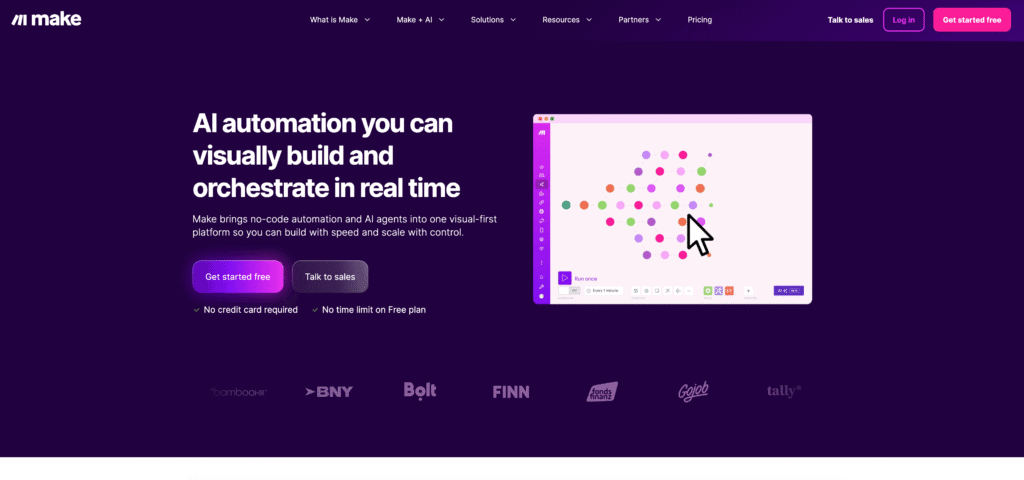
Pricing: $9/month (10,000 credits) → $29/month (Enterprise) | Free tier available
Best For: Complex multi-channel automation; SMBs needing workflow power without enterprise pricing.
Key Features:
- Scenario builder for complex workflows (if-then-else logic)
- Support for webhooks and API-first integrations
- Real-time automation with higher throughput than Zapier
- Built-in AI modules for content generation and data processing
- 1,000+ app marketplace integrations
Pros:
- Superior workflow complexity; handles nested conditions and loops
- Transparent task-based pricing (Zapier alternative with lower task consumption)
- Lifetime payout potential (12-month commission window per referral)
- Community-driven templates accelerate setup
Cons:
- Interface less intuitive than Zapier for absolute beginners
- Community support sometimes slower than Zapier’s (smaller ecosystem)
- Setup requires more workflow design thinking
ROI Impact for Small Business:
An operations manager using Make to sync Typeform leads → HubSpot CRM → Slack alerts → Email sequence in one automated flow eliminates 6 hours/week of manual copying. At $40/hour, that’s $12,480/year saved. Make cost: $30/month = $360/year = 35x ROI.
5. ActiveCampaign – Best for Email Automation & CRM Hybrid
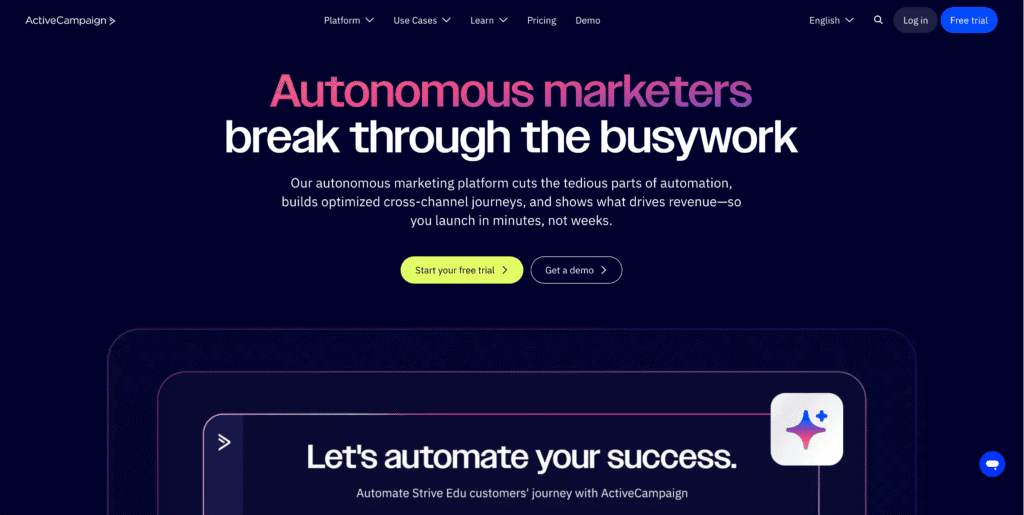
Pricing: $15-$145/month (tiered by contact count + features)
Best For: Small business teams running email sequences, lead scoring, and behavior-triggered campaigns.
Key Features:
- AI-powered automation builder suggesting workflows
- Advanced lead scoring with win probability prediction
- Multi-channel personalized outreach (email, SMS, social)
- Site tracking collecting intent data from website visitors
- CRM integration with sales pipeline management
Pros:
- Most affordable entry point ($15/month for small contact lists)
- Behavior-based triggers automatically respond to lead actions
- Built-in CRM eliminates tool stacking for small teams
- Site tracking reveals which prospects are researching you (buying signals)
Cons:
- Contact-based pricing means costs increase as list grows
- Email deliverability concerns reported by some users (lower than industry leaders)
- Limited phone/SMS capabilities (email-focused platform)
ROI Impact for Small Business:
A 10-person service company using ActiveCampaign to auto-score leads based on website behavior + email engagement surfaces 5-10 sales-ready leads/week. Converting 1 lead/week at $2,000 deal size = $104,000/year additional revenue. ActiveCampaign cost: $50/month = $600/year = 173x ROI.
6. Intercom – Best for Conversational AI & Real-Time Engagement
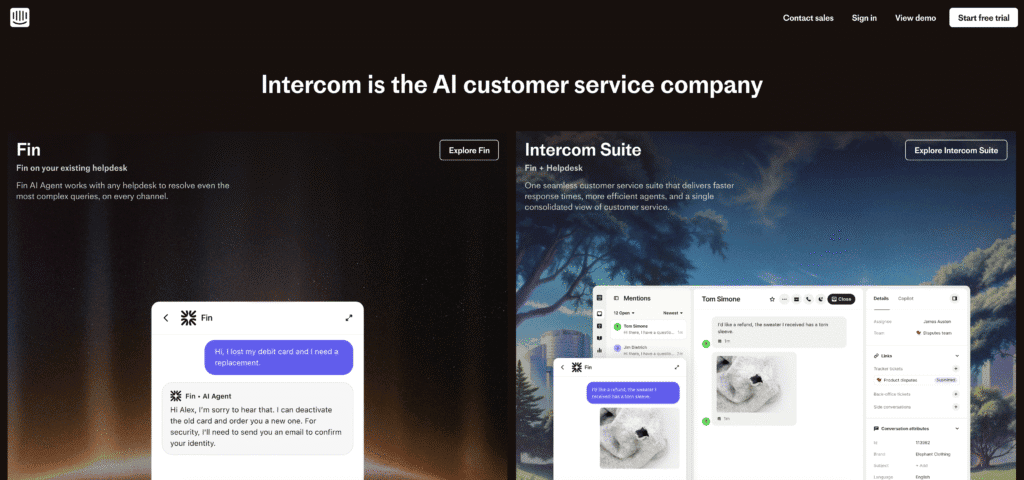
Pricing: $29-$132/month
Best For: SaaS and service companies converting website visitors with AI chatbots and instant support.
Key Features:
- Fin AI Agent automatically resolves 30% of support queries
- Live chat with human + AI handoff capabilities
- In-app messaging and product tours for onboarding
- Behavioral triggers (exit-intent, idle visitors)
- Deep integrations (Slack, Salesforce, Stripe)
Pros:
- AI-first approach; Fin Agent qualifies leads 24/7 (no manual setup needed)
- Exceptional startup discount (93% off year 1 makes it $65/month for enterprise features)
- Combines support + lead gen in one platform (eliminates separate tools)
- Proactive messaging turns cold visitors into warm leads instantly
Cons:
- Year 2 cost increases dramatically (50% off = $450+/month)
- Not primarily a lead gen tool (better for engagement than discovery)
- AI responses require training and tuning for best results
ROI Impact for Small Business:
A B2B SaaS startup using Intercom’s Fin AI Agent to respond to website chat 24/7 captures 30 leads/month that would otherwise bounce. With 10% conversion to trial, that’s 3 trials/month = 1 customer/month at $2,000 MRR = $24,000 annual revenue. Intercom cost (year 1): $780/year = $30x ROI.
7. Landbot – Best for No-Code Chatbots & WhatsApp Lead Capture
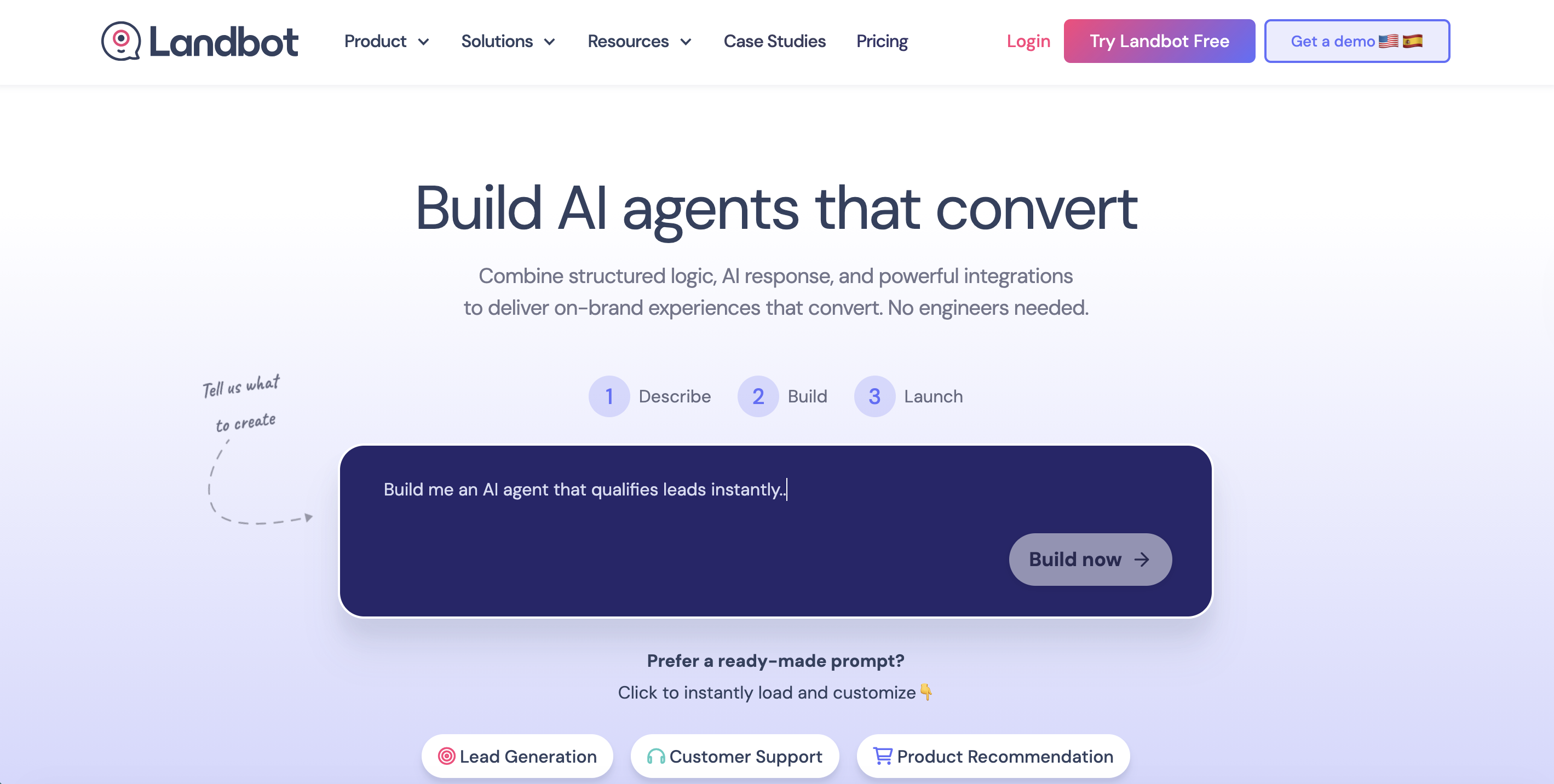
Pricing: €40-€400/month (starter to business) | Free tier available
Best For: Businesses capturing leads via WhatsApp, website chat, or conversational forms without coding.
Key Features:
- Visual chatbot builder (drag-and-drop, no code required)
- WhatsApp integration for messaging-first lead capture
- AI agent training on custom data (documents, website content)
- Lead enrichment from People Data Labs
- Automatic lead routing to sales team based on qualification
Pros:
- Lowest learning curve; non-technical teams build chatbots in hours
- WhatsApp integration unique among comparable tools (critical for emerging markets)
- Lead enrichment reduces manual research
- 50+ pre-built templates for rapid deployment
Cons:
- Conversation-based pricing scales quickly with volume
- Limited integrations compared to Zapier/Make
- AI responses need training for accuracy
Lead Generation Automation in Action: 3 Real-World Small Business Scenarios
Scenario 1: E-Commerce Service Business (Plumbing, HVAC, Electrical)
The Problem:
A 12-person plumbing company receives 50-80 leads/month from Google Local Services Ads, but responses take 4-8 hours. Leads abandon during response delay; conversion rate drops to 15% (vs. 35% if answered within 2 hours).
The Solution:
Deploy Intercom AI chatbot on website + Zapier automating lead capture → CRM assignment → Slack notification.
- Chatbot greets visitors 24/7, asks location/service type, books estimate
- Zapier auto-assigns high-intent leads to available technician
- Slack alert notifies team instantly (no checking email every 10 minutes)
Outcome:
- Response time drops from 4 hours to 2 minutes
- Conversion rate improves 15% → 28% (7x more revenue from same traffic)
- Monthly revenue increase: 30 leads × (28%-15%) × $800 avg service = $3,120/month = $37,440/year
- Tool cost: Intercom $65/mo (year 1) + Zapier $30/mo = $95/mo = $1,140/year
- ROI: 32x in year one
Scenario 2: B2B SaaS Startup (HR Tech, Accounting Software)
The Problem:
A 15-person SaaS startup wants to scale outbound sales but hiring an SDR costs $60K/year. Founders manually email 20-30 prospects/week, spending 12+ hours on research + personalization.
The Solution:
Implement Apollo.io for lead database + AI sequences + HubSpot for deal tracking + Make for nurture workflow automation.
- Apollo identifies 500 ideal prospect companies + decision-makers with buying signals
- AI-generated personalized cold emails: “I noticed [Company] just raised funding in $[X]. Are you evaluating [Solution Category]?”
- Apollo tracks opens/replies; replies auto-route to HubSpot
- Make workflow: If reply rate > 40%, trigger phone call sequence; if no engagement after 4 emails, add to nurture pool
Outcome:
- 2-person sales team covers 5x more outreach (500 prospects vs. 130)
- Reply rate: 8% (40 replies) → 15 qualified conversations → 3 demos → 1 customer
- New customer value: 1 × $5,000 MRR × 36-month avg lifetime = $180,000 lifetime revenue
- Tool cost: Apollo $50/mo + HubSpot $100/mo + Make $30/mo = $180/month = $2,160/year
- ROI: 83x (and residual revenue for 3 years)
Scenario 3: Professional Services Firm (Consulting, Agency)
The Problem:
A 25-person consulting firm converts 20% of leads into clients ($10K avg project). But lead nurture takes 6+ months; many qualified leads are forgotten in inbox.
The Solution:
Deploy ActiveCampaign for email sequences + AI lead scoring + Zapier syncing website form submissions → nurture flows.
- Website visitors see exit-intent popup: “Get our free SOW template” (captures 15% of visitors)
- ActiveCampaign auto-scores based on website behavior (page visits, download speed, time on site)
- High-scoring leads get 4-email sequence: Value prop → Case study → Social proof → CTA (book call)
- Zapier alerts sales team when lead reaches 80+ score
Outcome:
- Lead volume increases 40% (from email capture)
- Nurture conversion improves from 20% to 28% (vs. manual follow-up)
- 100 leads/month × 28% conversion × $10K project = $280K monthly pipeline
- Tool cost: ActiveCampaign $50/mo + Zapier $30/mo = $80/mo = $960/year
- New pipeline: $3.36M/year on $960 investment = 3,500x ROI
ROI Calculation & Cost Breakdown for Small Business
Understanding whether AI lead generation tools pay for themselves is essential. Here’s transparent math:
Time Savings Quantified:
Research shows AI lead generation tools save 15-30 minutes per day for each sales/marketing team member by eliminating manual research, list building, and follow-up scheduling. For a 5-person operations team:
- 5 people × 25 min/day × 250 working days = 625 hours/year saved
- At $40/hour fully loaded cost = $25,000 annual productivity recovery
Cost Investment:
Recommended stack for small business (5-50 employees):
- Primary tool (HubSpot Sales Hub or Apollo): $50-$100/month
- Automation layer (Zapier or Make): $30/month
- Optional email/CRM (ActiveCampaign if standalone): $15-$50/month
Total monthly investment: $95-$180/month = $1,140-$2,160/year
Lead Conversion Uplift:
Companies implementing AI lead generation report 18-35% improvement in conversion rates (from better qualification + faster response). Conservative estimate for $1M revenue company:
- Current leads: 200/month at 10% conversion = 20 customers
- With AI tools: 200 leads at 15% conversion = 30 customers
- Additional customers: 10/month at $1,000 avg value = $10,000/month = $120,000/year
Net ROI: $120,000 revenue increase – $1,800 tool cost = $118,200 net gain = 65x ROI
Payback Period: 5-7 days (one additional customer typically covers tool costs)
Getting Started: Your 4-Step Implementation Roadmap
Step 1: Choose Your Primary Use Case (Days 1-3)
Identify your biggest pain point:
- Slow lead response? → Intercom or Landbot
- Manual list building? → Apollo or HubSpot
- Workflow chaos? → Zapier or Make
- Email nurture neglected? → ActiveCampaign
Step 2: Start with Free Trials (Days 4-14)
Sign up for 14-day free trials of your top 2-3 choices. Involve your actual team in testing (they’ll provide honest feedback).
Free trial checklist:
- Can non-technical team member set up automation?
- Does it reduce daily manual tasks?
- Does reporting show ROI metrics?
Step 3: Launch with “Minimum Viable Automation” (Days 15-38)
Don’t try to automate everything. Start with one workflow:
Example for service business:
Website form → Zapier → Add lead to CRM → Slack notification
Example for SaaS:
Inbound email → Make → Check ICP criteria → If match: Create deal in HubSpot + Alert sales team
Step 4: Measure & Iterate (Ongoing)
Track three metrics:
- Response time (goal: <1 hour vs. <4 hours baseline)
- Conversion rate (goal: 15% improvement)
- Time saved (goal: 10+ hours/week per person)
Conclusion: AI Lead Generation Is No Longer Optional—It’s Table Stakes
Small business owners in 2026 face a simple choice: automate lead generation or watch competitors steal market share. The tools covered in this guide—Zapier, HubSpot, Apollo.io, Make, ActiveCampaign, Intercom, and Landbot—are proven to save 15+ hours weekly, increase conversion rates 18-35%, and deliver 30-83x ROI within 12 months.
The entry barrier is almost zero:
- No-code setup (non-technical teams succeed)
- Affordable pricing ($95-$180/month for entire stack)
- Payback period: one additional customer = tool costs covered
Your immediate next step: Pick one pain point (slow responses? buried in manual work? losing leads in inbox?), sign up for the free trial of the matching tool above, and measure impact for 14 days. You’ll have your answer.
The $1,800/year investment pays for itself in the first week of improvement. Don’t let another month of lost productivity pass.